The Application Guide: Conservation Techniques
Proper application of archival materials requires precise techniques developed through decades of conservation practice. This guide provides context and step-by-step instructions for specialized processes, ensuring materials perform as intended and maintain reversibility.

Torn Page Mending with Japanese Tissue
Mending torn pages requires careful alignment, appropriate adhesive selection, and precise application. Japanese tissue provides strength while maintaining flexibility and reversibility.
Step 1: Assessment
Examine the tear under magnification. Identify grain direction of both the original page and the repair tissue. Ensure tissue grain matches page grain for optimal strength.
Step 2: Preparation
Cut Japanese tissue to size, allowing 2-3mm overlap on each side of the tear. Tear edges (don't cut) to create feathered edges that blend seamlessly.
Step 3: Adhesive Application
Apply thin layer of wheat starch paste (5-7% concentration) to the tissue using a soft brush. Ensure even coverage without excess.
Step 4: Positioning
Carefully position tissue over the tear, aligning grain direction. Use tweezers for precise placement. Smooth from center outward to remove air bubbles.
Step 5: Drying & Finishing
Place repair under light weight with release paper. Allow to dry completely (24-48 hours). Remove excess tissue if needed using sharp scalpel.
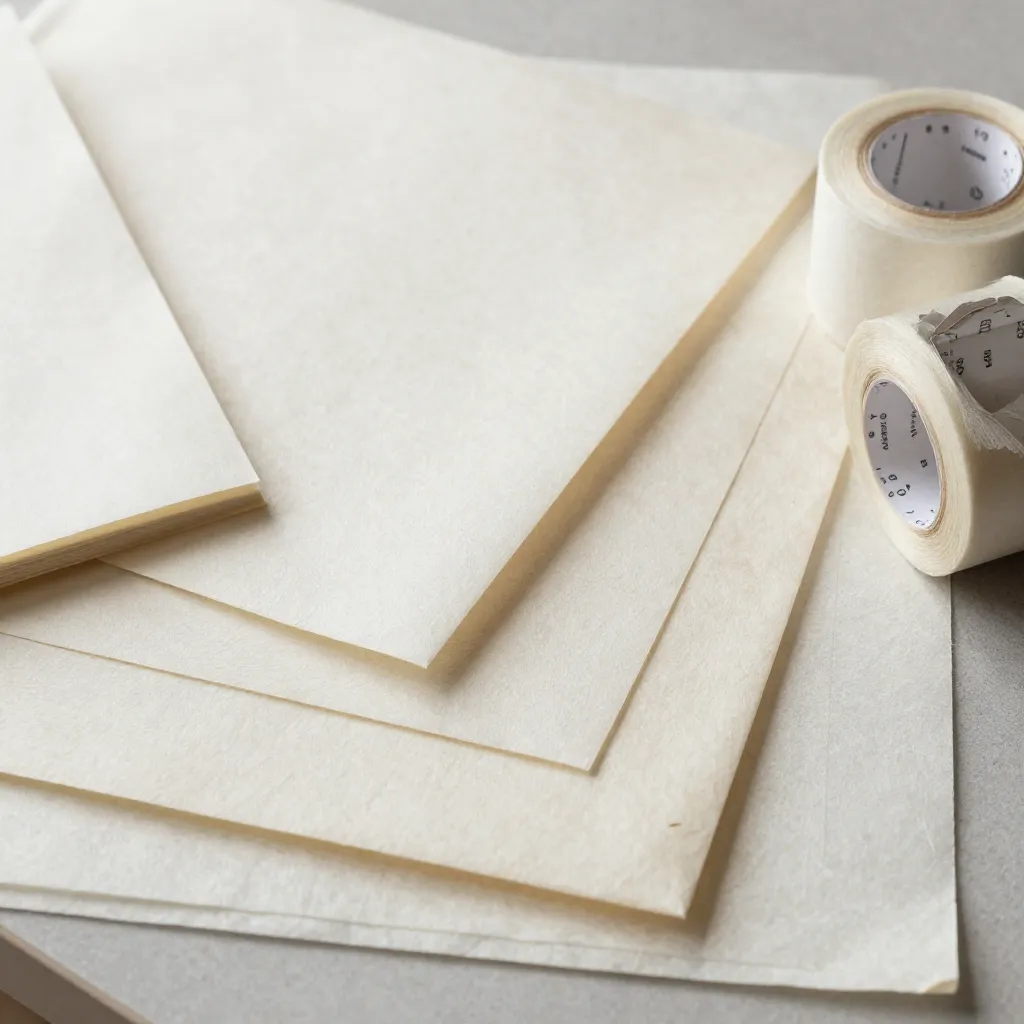
Hinge Repair Technique
Hinge repair restores the connection between the book block and covers, ensuring proper opening and closing while maintaining structural integrity.
Assessment
Evaluate hinge condition: identify areas of weakness, determine if full or partial repair is needed, check for previous repairs that may need reversal.
Material Selection
Choose appropriate Japanese tissue weight (typically 9-12gsm for hinges). Select adhesive based on original binding materials (wheat starch paste for most paper-based bindings).
Application
Apply tissue strip along the hinge line, extending 5-10mm onto both the book block and cover. Ensure tissue bridges the gap without creating tension. Use bone folder to crease along hinge line.
Reinforcement
For heavy books, apply second layer of tissue on the inside of the cover for additional strength. Allow each layer to dry before applying the next.
Finishing
Trim excess tissue, test hinge flexibility, ensure book opens and closes smoothly. Document repair in conservation records.

Spine Consolidation
Spine consolidation addresses crumbling or detached spine material, stabilizing the binding structure while preserving original materials whenever possible.
Condition Assessment
Document spine condition: identify loose fragments, assess adhesive failure, determine if consolidation or full rebacking is required.
Fragment Stabilization
Carefully reposition loose spine fragments using appropriate adhesive (methylcellulose for delicate materials). Use minimal adhesive to avoid over-saturation.
Tissue Reinforcement
Apply Japanese tissue over consolidated spine, extending onto covers if necessary. Tissue should be toned to match original spine color when visible.
Drying & Shaping
Shape spine while adhesive is still workable. Use book press or weights to maintain shape during drying. Allow 48-72 hours for complete drying.
Final Assessment
Test binding function, check for any remaining loose fragments, ensure spine maintains shape. Document all materials and techniques used.
Tool Selection & Maintenance
Proper tool selection and maintenance ensure precise work and prevent damage to materials. Conservation tools should be kept clean, sharp, and dedicated to archival work.
Essential Tools
- • Bone folder (smoothing, creasing)
- • Soft brushes (adhesive application)
- • Scalpel with replaceable blades
- • Tweezers (fine positioning)
- • Weights and presses
- • Release paper (non-stick surface)
Tool Care
- • Clean tools after each use
- • Store in acid-free containers
- • Replace blades regularly
- • Keep brushes soft and pliable
- • Avoid cross-contamination
- • Dedicate tools to conservation work
Documentation Standards
Thorough documentation of conservation work ensures future conservators understand previous interventions and can make informed decisions about additional work.
Photographic Record
Before, during, and after photographs documenting condition and treatment. Include scale references and detailed close-ups of specific areas.
Material Documentation
Record all materials used: product names, batch numbers, application methods, concentrations, and quantities. Attach Material Data Sheets when available.
Treatment Report
Written description of condition, treatment rationale, techniques employed, and any deviations from standard procedures. Include date and conservator name.
Reversibility Notes
Document how each material can be reversed in the future, including recommended solvents and techniques for removal.